Gujarati, English or Bilingual? Choosing a Preschool Language in Ahmedabad
Gujarati, English or bilingual? How Ahmedabad parents can think about the language of instruction at preschool, what NEP 2020 says about home language, and what to ask schools
 Rahul Mishra
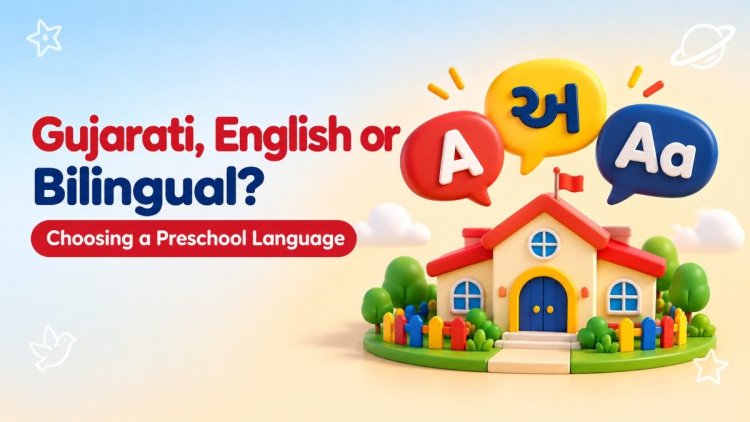
Many Ahmedabad parents ask whether their child's preschool should teach in English, Gujarati or both. For most children aged two to six, a bilingual preschool that uses the child's home language for comfort and understanding while steadily introducing English works well. NEP 2020 recommends that the home language or mother tongue be used as the medium of instruction wherever possible in the early years, and young children can learn two or more languages at once with ease. This article explains the options, what research and policy suggest, and the questions to ask Ahmedabad preschools about language.
Why is language such an important question in Ahmedabad?
Because many Ahmedabad families speak Gujarati, Hindi or another language at home while also wanting strong English for later schooling, and they want a preschool that supports both.
Ahmedabad is a diverse city. Many families speak Gujarati at home, others Hindi, Marwari, Sindhi or another language, and many want their child to attend an English-medium school later. Parents naturally worry about whether a preschool should focus on English early or on the home language.
The good news is that this is not an either-or choice. Young children's brains are well suited to learning more than one language, especially through play, songs and conversation.
What does NEP 2020 say about language in early education?
It recommends the home language or mother tongue as the medium of instruction wherever possible, at least until Grade 5, and encourages exposure to multiple languages from the foundational stage.
NEP 2020 notes that children learn concepts most easily in a language they understand well. It also encourages multilingualism, recognising that young children pick up languages quickly. In practice, many preschools follow a bilingual approach: they use English for much of the day while allowing and supporting the home language, especially for comfort and explanation.
This matters for settling in. A two- or three-year-old who hears a familiar language from a teacher on difficult days often feels safer and settles faster.
How do English, Gujarati and bilingual preschools compare?
English-focused schools build early English exposure, Gujarati-focused schools build home-language strength and comfort, and bilingual schools combine both.
|
Approach |
Strengths |
Things to consider |
|
Mainly English |
Strong early exposure if the child will attend an English-medium school |
Children who speak little English at home may need more settling support |
|
Mainly Gujarati |
Comfort, faster understanding, strong home-language roots |
Plan for English exposure before Class 1 if moving to English medium |
|
Bilingual |
Comfort plus steady English exposure, supports multilingual growth |
Ask how the balance is managed across the day and by age |
For most families in Ahmedabad, a bilingual approach offers the best balance, especially in the younger classes.
Will using Gujarati at preschool slow down English learning?
No. Research on bilingual children suggests that a strong home language supports, rather than slows, learning a second language.
Children who understand concepts well in their home language can transfer that understanding to English. A child who knows what "big" and "small" mean in Gujarati learns the English words quickly. Strong storytelling and vocabulary in the home language build the thinking skills that later help with reading in any language.
What matters most is rich language exposure: lots of talking, stories, songs and conversation, in whichever languages the child hears regularly.
What should you ask Ahmedabad preschools about language?
Ask which languages teachers use, how English is introduced at each age, how the school supports children who do not speak English at home, and whether rhymes and stories are offered in more than one language.
-
Which language do teachers mainly use with two- and three-year-olds?
-
How is English introduced, and how does this change by junior and senior KG?
-
Can teachers comfort or explain in Gujarati or Hindi when a child needs it?
-
Are stories, songs and rhymes offered in more than one language?
-
How will my child be prepared for the language of their future school?
Branded preschool networks with a strong Gujarat presence, such as Shanti Juniors, which has its home base in the state, are often used to supporting children from many language backgrounds. Visit and listen to how teachers speak with children before deciding. The brand's list of questions to ask before admission is also useful.
How can parents support language at home?
Speak your home language richly, read and sing every day, add simple English through books and songs, and avoid pressuring young children to perform in a language.
Talk with your child often in the language you are most comfortable with. Rich, natural conversation is far more valuable than broken English. Read picture books in both languages if possible. Sing rhymes. Let English grow naturally alongside the home language.
Avoid correcting a young child harshly for mixing languages. Mixing is a normal stage of bilingual development and usually settles on its own.
Frequently asked questions
What are the best preschools in Ahmedabad for English?
Look for preschools with a structured, play-based curriculum that introduces English steadily through stories, songs and conversation, while supporting children's home language for comfort.
Should my child learn Gujarati or English first?
Young children can learn both together. A strong home language supports later English learning.
Does NEP 2020 require Gujarati-medium preschools?
NEP 2020 recommends home language or mother tongue as the medium of instruction wherever possible, but schools vary in how they apply this. Ask each school about its approach.
Will my child be confused by two languages?
Mixing languages is normal for young bilingual children and does not indicate confusion. It usually settles naturally.
How do I know a preschool supports both languages?
Visit during class hours, listen to how teachers speak, and ask how English and home languages are used across the day.
Author Bio
Written by an independent education-sector analyst who studies India's early-education franchise market, including brands such as EuroKids, Kidzee, Little Millennium and Shanti Juniors.